
In a high-stakes game of military chess, Iran made a bold move that would soon turn into a catastrophic miscalculation. On a seemingly ordinary afternoon, the Iranian Revolutionary Guard initiated a missile strike against the USS Theodore Roosevelt, a nuclear-powered aircraft carrier, marking a dramatic escalation in tensions in the volatile Strait of Hormuz. What transpired over the next 32 minutes would not only change the course of the confrontation but also demonstrate the overwhelming power of American military might.
The Calm Before the Storm
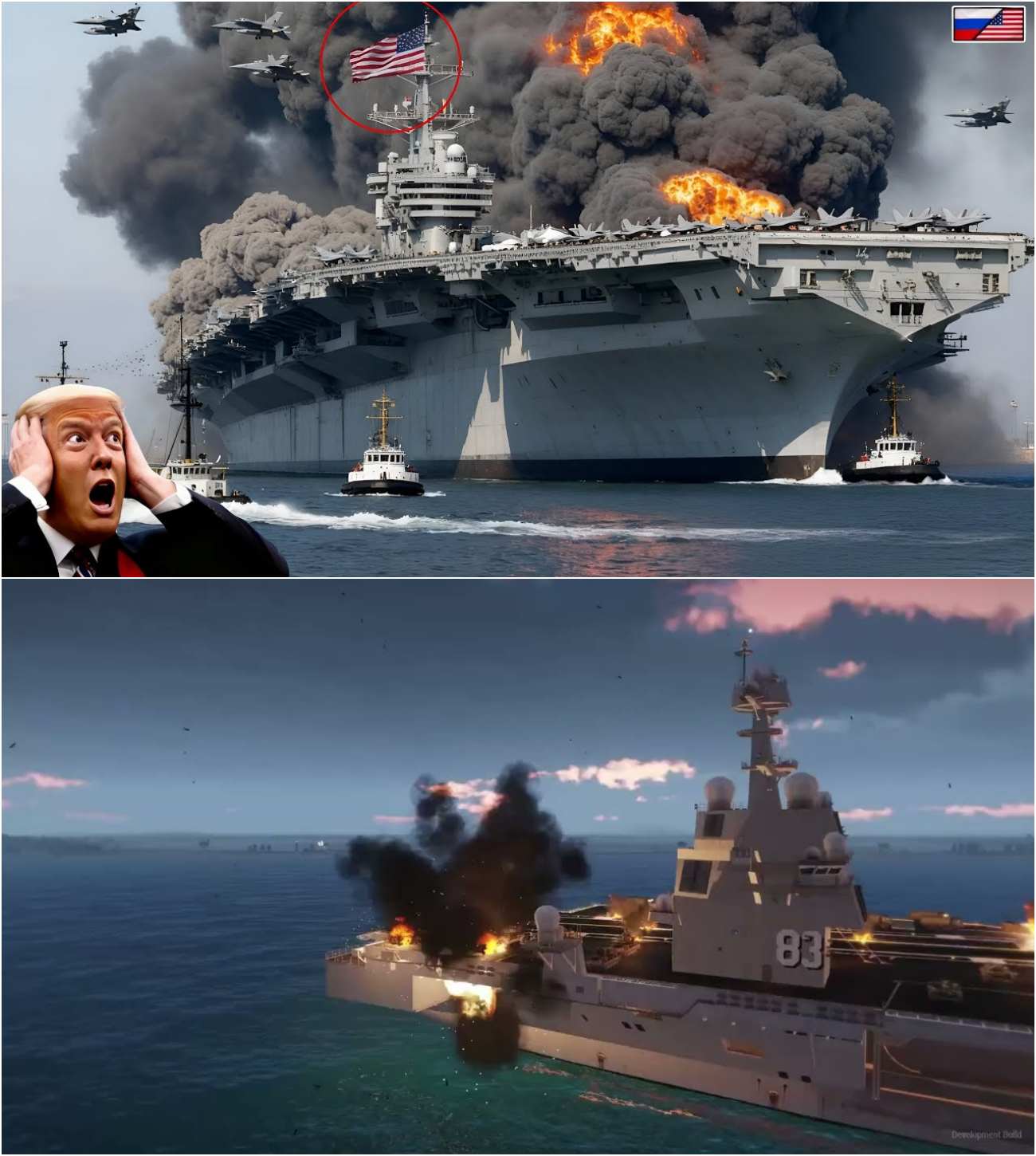
At 7:45 AM, the USS Theodore Roosevelt entered the Strait of Hormuz, navigating the narrow waters that serve as a critical artery for global oil transport. With 4,700 sailors aboard and 95 aircraft on deck, the carrier was a floating fortress, a symbol of American naval strength. The waters were watched closely by Iranian coastal radar, but the initial passage was uneventful, a routine maneuver through one of the world’s most dangerous chokepoints.
By 11:15 AM, Iranian radar had locked onto the Roosevelt and its accompanying strike group, which included five warships and three Arleigh Burke destroyers. Captain James Chen, commanding the Roosevelt, noted the routine harassment but remained unfazed. However, the atmosphere shifted dramatically at 1:52 PM when U.S. intelligence intercepted encrypted communications from Iranian military units.
The phrase that sent chills down the spines of analysts was simple yet ominous: “Package delivery authorized for afternoon transit.” This was not mere surveillance; it was a clear signal that Iran was preparing for an attack.
The Countdown Begins
At 2:18 PM, Iranian coastal missile batteries went to elevated alert. The electronic signatures screamed hostile intent, prompting Captain Chen to order all ships to battle stations. Alarm claxons echoed through the vessels as 4,700 sailors sprinted to their posts, readying for what could become a life-or-death situation.